
What is aphasia?
Aphasia is the total or partial loss of language that causes a communication disorder hindering social participation. It is not a loss of intelligence, but a loss of words.
Not a loss
of intelligence
but of words.
Day to day
The effects of Aphasia
Aphasia can affect all four ways of communicating, to varying degrees from one person to another.
Aphasia also impacts the social participation and relationships of people living with aphasia.
Difficulty speaking
Finding the right words, forming sentences and speaking out loud becomes difficult.
Difficulty understanding
Understanding what others say, numbers or instructions can become hard.
Difficulty writing
Writing words or texts becomes a complicated task.
Difficulty reading
Reading texts or signs becomes a daily obstacle.
How Does Aphasia Affect Social Life? – Produced by Savoir média and created by Emna Fakhfakh, a speech-language pathology student at the Université de Montréal.
Understanding
The Causes of Aphasia
What are the causes?
Aphasia is the result of brain lesions caused, for example, by a stroke, a traumatic brain injury (TBI) or a brain tumour. In the case of primary progressive aphasia (PPA), it is a progressive degeneration. It can affect anyone, at any age.
Understanding
The types of aphasia
There are several types of aphasia, which differ by the presence or absence of certain symptoms.
Broca’s aphasia
Also called: expressive, anterior or motor aphasia
It is recognized by a reduction in expression, usually accompanied by an articulation disorder. The person speaks little, slowly, and searches for words. They may have similar difficulties when they try to write. These difficulties are not solely related to having to learn to write with the left hand when the right hand is paralyzed, but are usually comparable to the difficulties observed in spoken language. Comprehension is generally fairly well preserved.
Wernicke’s aphasia
Also called: sensory, posterior, comprehension or receptive aphasia
It is characterized by significant difficulty understanding what is said and what is written. A person with Wernicke’s aphasia speaks easily or even abundantly. They make paraphasias and, sometimes, speak in jargon. If they try to write, they generally experience the same difficulties as when they speak. Some people are not always aware of their errors, at least in the early stages following the stroke.
Conduction aphasia
It shows up as speech broken up by hesitations and pauses caused by difficulty finding words and, above all, by the production of numerous paraphasias. The person mixes up sounds within words and, since they are usually aware of it, they try to correct themselves as they go through successive attempts. Sometimes the paraphasias are so abundant that they can give rise to jargon. Unlike Wernicke’s aphasia, which it can sometimes resemble, conduction aphasia is generally not accompanied by significant comprehension difficulties. It can be the result of a Wernicke’s aphasia that has improved.
Mixed aphasia
When there is both a reduction in expression and significant difficulty with comprehension.
Anomic aphasia
It stands out for the almost exclusive presence of a more or less marked word-finding difficulty.
Global aphasia
This is the most severe form of aphasia. Expression is almost nonexistent; this is referred to as a suppression of language. Comprehension difficulties are also very significant.
Source: Ministère de la Santé et des Services sociaux du Québec. (2016). Vous connaissez une personne aphasique? Gouvernement du Québec.
Primary progressive aphasias (PPA)
A primary progressive aphasia (PPA) is a degenerative brain disease that mainly affects language. The effects can be subtle, but they can also go as far as a total inability to communicate. In the early stages of the disease, other cognitive functions (e.g. memory, calculation, etc.) are better preserved. There are three types of PPA:
- Non-fluent / agrammatic PPA: slowed speech and difficulty speaking.
- Logopenic PPA: difficulty finding words.
- Semantic PPA: a loss of the meaning of words and of general knowledge.
Source: Plateforme A.P.P. (2026). Définition. Learn more about Plateforme A.P.P.
AWARENESS
Changing the way we see aphasia
Aphasia does not affect intelligence — and yet, people living with it face judgment and isolation. These videos, created by speech-language pathology students, debunk the myths and offer concrete ways to connect and communicate.
-
Kariane Alepins – Explaining Aphasia
Read more: Kariane Alepins – Explaining AphasiaUniversity project by Kariane Alepins, speech-language pathology student at Université de Montréal. Imagine living in a country where you neither speak nor understand the language: you know exactly…
-
Maude Gauthier – Explaining Aphasia
Read more: Maude Gauthier – Explaining AphasiaUniversity project by Maude Gauthier, speech-language pathology student at Université de Montréal. An officer responds to a call: an individual seems disoriented, wanders through a building swearing, and…
-
Laurianne Lécluse – Explaining Aphasia
Read more: Laurianne Lécluse – Explaining AphasiaUnderstanding aphasia — University project by Laurianne Lécluse, speech-language pathology student at Université de Montréal. Aphasia is a communication disorder that remains far too little known, yet it…
Testimonials
Every journey with aphasia is unique
Journeys to recognize yourself in, to feel understood and to keep hope. Click on a testimonial to read it in full.

Sébastien Théâtre Aphasique
[…] this place has become a real breath of fresh air for him. He finds laughter and smiles again there, and above all a wonderful camaraderie with people who understand what he is going through.
Sébastien was an IT technician before his stroke, which happened in 2021, turned his daily life upside down.
In September 2022, on the recommendation of his speech-language pathologist, he walked through the door of the Théâtre Aphasique. Since then, this place has become a real breath of fresh air for him.
He finds laughter and smiles again there, and above all a wonderful camaraderie with people who understand what he is going through.
Text from the Théâtre Aphasique fundraising campaign.
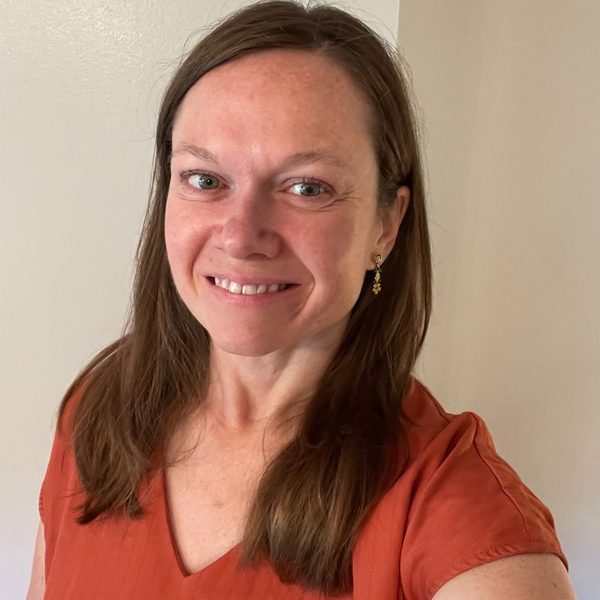
Annie Théâtre Aphasique
During her rehabilitation in Ottawa, she happened to discover the Théâtre Aphasique website. Something immediately resonated with her: she knew that one day she would be part of it.
Annie was working as a Learning Specialist at the federal Department of Global Affairs Canada when she suffered a stroke in October 2020.
During her rehabilitation in Ottawa, she happened to discover the Théâtre Aphasique website. Something immediately resonated with her: she knew that one day she would be part of it.
Three years later, after moving to Montreal, Annie finally joined Théâtre Aphasique. Since then, it has provided her with a sense of well-being, confidence, and a deep feeling of belonging.

Lisa France, Europe
Aphasia is an invisible disability that remains far too little known and that profoundly isolates those who live with it.
At the age of 14, Lisa began experiencing the first symptoms of epilepsy. At 16, due to the severity and frequency of her seizures, she was placed in a coma. When she awoke, she was hemiplegic. The diagnosis then came: Rasmussen’s encephalitis.
I will not dwell on the hell she went through. How could it be otherwise when, one morning, you see all your dreams as a young girl disappear?
For loved ones, the suffering is immense; that feeling of helplessness is unbearable.
Because her epilepsy was resistant to medication, the seizures continued, although they became less severe. Hospitalizations and rehabilitation stays followed one after another.
At the beginning of 2025, surgery was deemed necessary. A hemispherotomy was performed last July.
Although the seizures have stopped, Lisa has lost the ability to speak and can now say only a few words. She has entered another kind of hell: aphasia, compounded by right-sided hemiplegia. No longer being able to express herself, no longer being able to make herself understood… The distress we see on her face when, despite all our efforts, we cannot understand what she is trying to say is a source of immense suffering.
Aphasia is an invisible disability that remains far too little known and that profoundly isolates those who live with it. If this testimony can help raise awareness of this reality and support other families, then it will have served its purpose.
Roland Gagneux, Lisa’s grandfather

Camille Lajoie Speech-Language Pathologist at Villa Medica Rehabilitation Hospital
These organizations help them reinvent themselves, adapt to their new reality, and build connections with people who truly understand what they are going through.
Community organizations are an essential part of the social reintegration process for many people with aphasia. These organizations help them reinvent themselves, adapt to their new reality, and build connections with people who truly understand what they are going through.
In my view, the workshops provide a golden opportunity, both during rehabilitation and afterward, to increase language and social stimulation, interact with a wider variety of people, and engage in meaningful, supportive, and accessible exchanges, all within a relaxed and enjoyable environment.
– Camille Lajoie, Speech-Language Pathologist at Villa Medica Rehabilitation Hospital for 15 years and co-facilitator at Théâtre Aphasique.
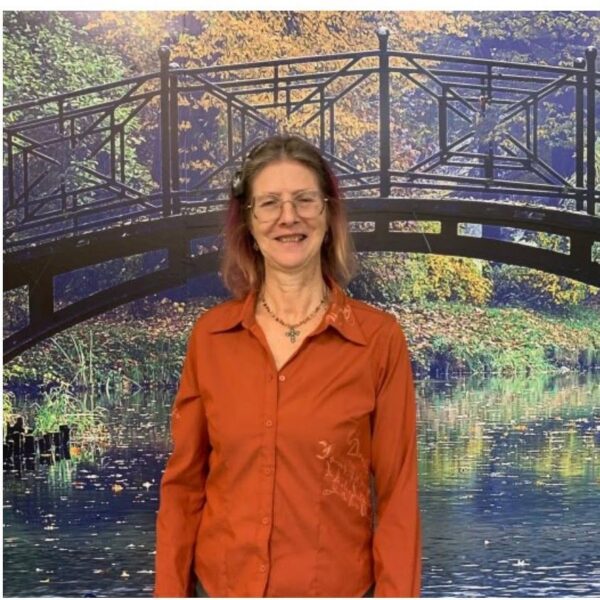
Sylvie Bergeron Association des neurotraumatisés de l'Outaouais
I have been through many hardships and, thanks to my determination, I manage to carry on. […] Be patient, it will take time, but the effort pays off.
My name is Sylvie Bergeron. I’m originally from Magog, in the Estrie region. I moved to Gatineau to be closer to my daughter and my granddaughter. I worked as a bookkeeping clerk. I am now retired, since March 2017, forced into it by the stroke.
To keep busy, I like to watch tennis and figure skating on TV, as well as movies and series. I also like to go to the park with my five-year-old granddaughter.
I am a very patient person, sociable, and I like to listen to others. I have been through many hardships and, thanks to my determination, I manage to carry on. I am able to find the positive in hardships.
I have been a member of the ANO for a year […]. The activities I most enjoy taking part in are the memory workshop, “strength in numbers” and board games. I like coming to the ANO to get to know people, and it helps me break out of my isolation.
My great resilience is what allows me to stay strong and to keep thriving despite my difficulties. Be patient, it will take time, but the effort pays off. You have to work hard to get results.

Normand Leduc
I had completely lost the ability to speak […]. Today, my speech remains slightly affected, especially when I’m tired. A few stammers or words that come out […] unintelligible (I laugh about it!).
Affected by aphasia since 2007 following 2 brain operations, I had a large mass (brain abscess) and I was between life and death. I survived by a MIRACLE thanks to my internationally renowned neurologist, Dr. Michel Bojanowski, and above all to my faith in God.
I had completely lost the ability to speak and, after rehabilitation with a speech-language pathologist and the mass in my brain shrinking, I regained my language ability. I was able to return to work at the end of 2008 as a human resources advisor at the SAQ — quite a challenge!
Today, my speech remains slightly affected, especially when I’m tired. A few stammers or words that come out unintelligible (I laugh about it!).
Here is a photo of me and my wife Véronique. She has been my caregiver, with love. Today, nearly 60 years old, that’s been 20 years! I retired from the SAQ after 35 years of service and I now work at a golf club. I am also a humanitarian aid missionary in the Dominican Republic.
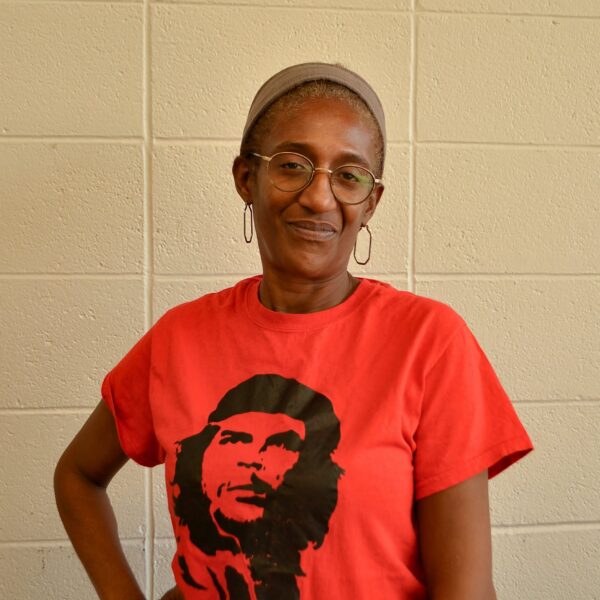
Myriam Théâtre Aphasique
After a long period of rehabilitation, she refuses to let herself be defined by the illness. […] she allows herself to become fully herself again.
On December 19, 2016, while she was working at a youth centre in Montréal, Myriam was struck by a hemorrhagic stroke. Three days later, she woke up in the hospital, unable to move her left side.
After a long period of rehabilitation, she refuses to let herself be defined by the illness. At the Théâtre Aphasique, she finds meaning, worth and a place where she feels welcomed and understood. There, she allows herself to become fully herself again.
FAQ
Frequently asked questions about aphasia
What is aphasia?
Aphasia is the total or partial loss of language caused by a brain injury. It can affect speech, comprehension, reading and writing. It is not a loss of intelligence: the person keeps their ideas and their personality, but has difficulty expressing them.
What causes aphasia?
Aphasia results from brain lesions. The most common causes are stroke, traumatic brain injury (TBI), brain tumours and degenerative diseases such as primary progressive aphasia (PPA). It can occur at any age.
What are the symptoms of aphasia?
The signs vary from one person to another: searching for words, saying one word for another, making short sentences or sentences that are hard to follow, misunderstanding what is said, or having trouble reading and writing.
What are the different types of aphasia?
These include Broca’s aphasia (reduced expression), Wernicke’s aphasia (impaired comprehension), conduction, mixed, anomic (word-finding difficulty) and global aphasia (the most severe form), as well as the primary progressive aphasias. See the types of aphasia.
Does aphasia affect intelligence?
No. Aphasia is a language disorder, not an intelligence disorder, and it is not a mental illness. The person thinks normally; it is access to words that is disrupted.
Can aphasia be treated?
Recovery depends on the cause and the severity. After a stroke or a TBI, progress is possible, especially with speech therapy and regular communication practice. For primary progressive aphasia, the progression is gradual, but strategies help to maintain communication for as long as possible.
What is primary progressive aphasia (PPA)?
PPA is a degenerative brain disease that affects language first, while other functions (memory, calculation) are better preserved at the start. It comprises three forms: non-fluent/agrammatic, logopenic and semantic.
How do I communicate with a person with aphasia?
Speak slowly, one idea at a time, allowing time to respond. Use short sentences, writing, gestures or pictures, and confirm that you have understood correctly without finishing their sentences for them. Feel free to visit the toolbox for more communication strategies.